Foundations

Why a citadela works, at its core.

The frameworks, authors and methods behind the model all point to the same place: the human project. What is thought, designed and operated moves in that direction. Here are the ten principles, what we believe, what shapes our thinking, how we work and who lives here and who comes.

  1. IThe new map
  2. IIWhat we believe
  3. IIIShared authors
  4. IVHow we work
  5. VWho lives here and who comes

I · The new map of real estate investment

Ten principles every citadela follows.

Each citadela adapts them to its land; all ten remain. Every decision is checked against them: a business, a plan, a figure.

  1. 01Resilient investmentAssets prepared for a world of limited resources and volatile supply chains, that stay valuable, operational and profitable for decades.
  2. 02Operational intelligence and eco-technologySoftware, smart construction and eco-techniques that orchestrate community life and profitability, in a self-sufficient habitat integrated with nature.
  3. 03Flow-based designThe architecture follows the natural flows of energy and water, and captures them to raise the value per square meter and lower the cost of operating.
  4. 04Hyper-local, circular economyRetail, an origin market and curated food that attract, retain and recirculate capital within the ecosystem itself.
  5. 05Universal, active mobilityWalking as the way to get around: paths for bikes, skates, wheelchairs and strollers that draw foot traffic and well-being.
  6. 06A multispecies ecosystemAnimals as a central part of family life, integrated into the landscape and the life of the community.
  7. 07Everyday life as the anchorInhabitants who bring people every day, like a high-performance coworking space or a Montessori school: a daily flow that sustains every other business.
  8. 08Strategic porosityAn open, porous and safe setting where residents and visitors feed commerce and the life of the place.
  9. 09Dunbar-based social designHomes for up to 60 families: the scale at which people sustain stable relationships, belonging and mutual care.
  10. 10Organic appreciation and safetyA connected community looks after its surroundings, keeps its people and speeds up the appreciation of the land.

II · What we believe

Back to the essentials with today's technology.

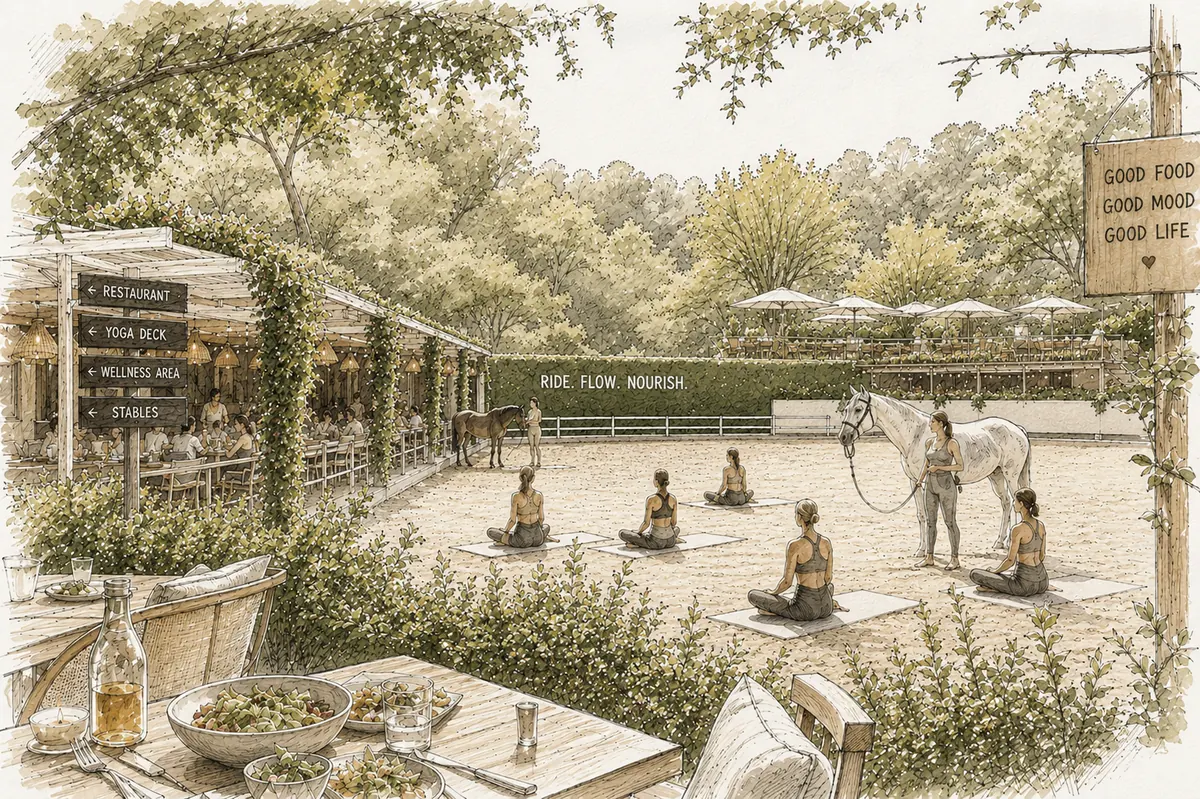
Watercolor of an outdoor yoga class

III · Shared authors

What shapes our thinking and points to what comes next.

Ideas from different disciplines that shape how we think and point toward what comes next to build: the human project. If one of them moves you, we already have something to talk about.

The questions of our time

This framework is brought together by Joseadrián, Citadela Founder, from his training in integral development with Raúl Romero and Integralis, and in flow and meaning with Jamie Wheal. See his background ↗

IV · How we work

Shared methodologies

  1. 01Read the vocation of the landTopography, water, natural flows, surroundings and history before any plan.
  2. 02TropicalizeEco-techniques, anthropological research and the local as a pillar: each place brings its land and its materials; the why and the how remain.
  3. 03Curate the businessesWhat arrives and how it fits, so inhabitants send customers to one another.
  4. 04The same numbers in plain sightThe Negotiator puts one screen in front of the owner and each inhabitant so they decide together.
  5. 05One digital checkoutEverything is collected in one account and each inhabitant receives their share, with the common costs in plain sight.
  6. 06Run by a Citadela ManagerA single administration sets and keeps the rules: agile decisions and a place always in order.
  7. 07A purpose that emergesPurpose is not drafted in a boardroom: it emerges with everyone involved in the room —owner, inhabitants, neighbors and suppliers— using the Future Search method of Integralis Consulting Group.
  8. 08Awe, repair and communityRites of passage for young people, solstice and equinox celebrations, and a shared table for the conversations that matter.
  9. 09The obvious, firstGood sleep, movement, sunlight, real food, cold and hot water, music and gratitude: the daily life the place makes easy.

Communities of practice

Every citadela grows communities of practice: groups who share a craft or a passion —the garden, the kitchen, parenting, cycling, building with earth— and learn together by doing it. They work with Raúl Romero's Re-evolución Personal method: each person finds their purpose, chooses their life roles, sets goals for each role and moves forward in cells that support one another. Knowledge stays in the place and grows with its people.

V · Who lives here and who comes

A citadela is counted in two: those who live there and those who come.

We count residents, who sleep there, separately from non-residents, who come and go. That mix creates the flow that sustains the market, the shops, the kitchen and hospitality.

Residents ≈ 210 per night

Non-residents ≈ 1,460 per day

Open and porous Together, we know everything

A citadela is an open population: it brings in the outside world and shares what it has with it. People, students and teachers, languages and cultures, solutions, eco-techniques and processes cross-pollinate between citadelas. What one learns, all of them use.

Estimate based on La Citadela de Zavaleta, with a school of about 400 students. It is recalculated with what is measured on site.

Each citadela moves thousands of people. Critical mass is built one citadela at a time.

Write to usDiscover the citadelas